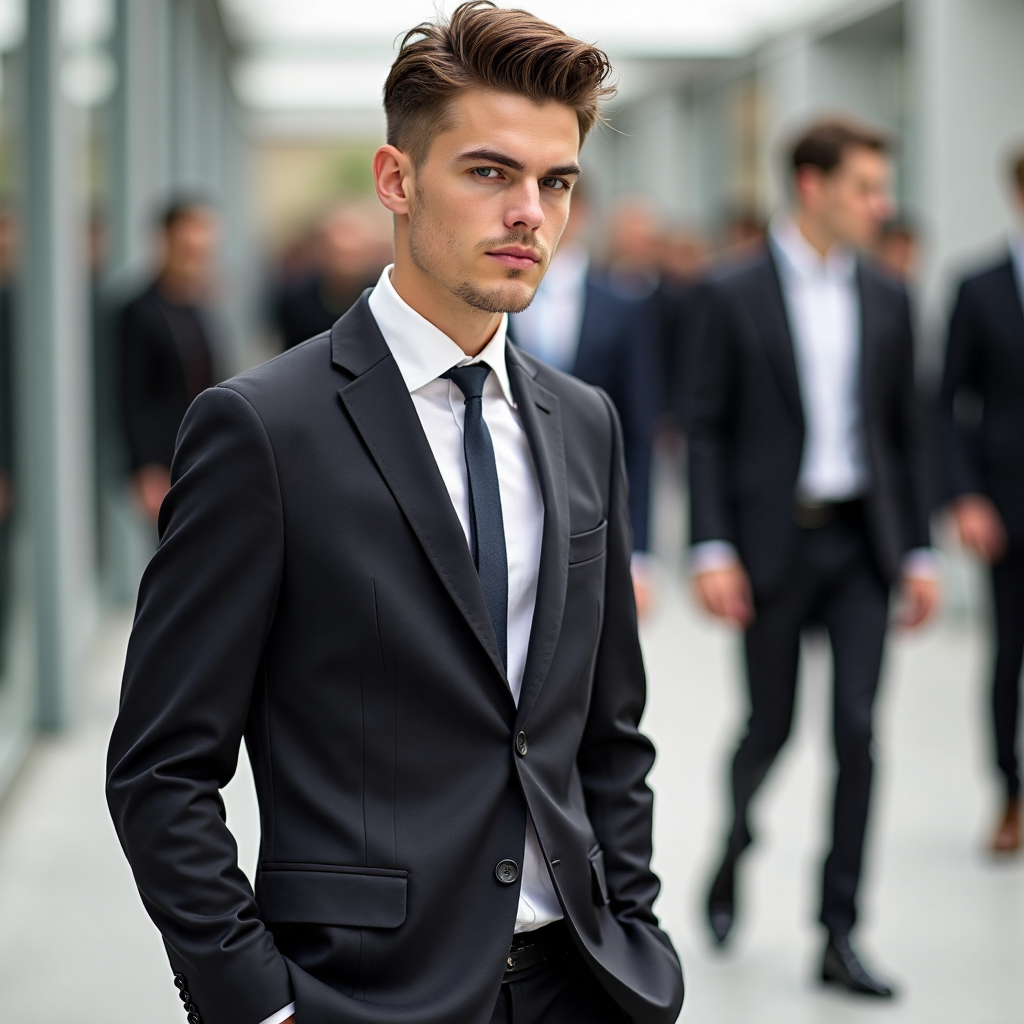
Androgynous tailoring has emerged as one of the most compelling movements in contemporary fashion, challenging centuries of sartorial conventions and redefining what it means to dress with intention. At its core, androgynous tailoring is the practice of designing and wearing tailored garments—blazers, trousers, waistcoats, and overcoats—in ways that transcend traditional gender boundaries. It is not merely about women wearing suits or men wearing softer silhouettes; rather, it is a sophisticated dialogue between structure and fluidity, between the sharpness of classic menswear techniques and the expressive possibilities of gender-neutral design. The result is a wardrobe philosophy that prioritises cut, proportion, and personal identity over prescribed notions of masculine or feminine dress.
The significance of androgynous tailoring extends far beyond the runway. It represents a cultural shift in how we understand clothing as a form of self-expression. For decades, the tailored suit was the ultimate symbol of masculine power and authority, while soft, draped garments were associated with femininity. Androgynous tailoring breaks down these binaries, offering a visual language that speaks to individuality rather than conformity. This evolution has been driven by designers, celebrities, and everyday people who recognise that the sharp line of a well-cut lapel or the precise drape of a trouser can belong to anyone, regardless of gender. The movement has gained momentum in recent years, fuelled by broader conversations about gender identity, inclusivity, and the democratisation of fashion.
In this comprehensive exploration of androgynous tailoring, we will trace its historical roots, examine the technical elements that define the style, analyse its cultural impact, and provide practical guidance for incorporating these principles into a modern wardrobe. Whether you are a fashion professional, a style enthusiast, or simply someone curious about the evolving landscape of dress, understanding androgynous tailoring offers valuable insights into the future of fashion and the enduring power of the tailored garment.
The Historical Evolution of Androgynous Tailoring
The story of androgynous tailoring is deeply interwoven with the broader history of women’s emancipation and the shifting landscape of gender roles in society. While the concept may feel distinctly contemporary, its origins can be traced back more than a century, to a time when women began to challenge the restrictive clothing that had long defined their place in the social order. The journey from the corseted silhouettes of the Victorian era to the fluid, gender-inclusive tailoring of today is a fascinating narrative of rebellion, innovation, and artistic vision.
The Pioneering Era: Chanel and the Borrowed Wardrobe
The first significant breakthrough in androgynous tailoring came in the 1920s with the revolutionary work of Coco Chanel. Chanel fundamentally altered the course of women’s fashion by introducing elements of menswear into the female wardrobe. Her designs incorporated jersey fabrics traditionally used for men’s underwear, and she championed relaxed silhouettes that allowed for movement and comfort. Chanel’s iconic tweed suits, with their straight lines and absence of restrictive corsetry, represented a radical departure from the prevailing fashion of the time. She famously stated that she wanted to dress women in clothing that allowed them to live their lives fully—to work, to drive, to move freely. This philosophy laid the groundwork for everything that would follow in the realm of androgynous tailoring.
The Provocative 1960s and Yves Saint Laurent’s Le Smoking
If Chanel planted the seeds of androgynous tailoring, it was Yves Saint Laurent who brought it into full bloom with his legendary Le Smoking tuxedo, introduced in 1966. This garment was nothing short of revolutionary—a tuxedo suit designed specifically for women, complete with sharply tailored trousers, a crisp shirt, and a bow tie. The audacity of presenting a woman in what was then considered the ultimate symbol of masculine attire sent shockwaves through the fashion world. Initially met with controversy, with some restaurants allegedly refusing entry to women wearing the suit, Le Smoking quickly became a symbol of female empowerment and sexual liberation. Saint Laurent understood that the power of the suit lay not in its masculinity but in its tailoring—the precise structure that could be adapted to celebrate the female form while borrowing the authority traditionally reserved for men. The designer famously declared that he had given women the power to face the world with confidence, and the tuxedo became a permanent fixture in his collections, evolving each season to explore new interpretations of androgynous elegance.
The Power Dressing Era and Beyond
The 1980s witnessed the rise of power dressing, a phenomenon that saw women adopting exaggerated shoulder pads, double-breasted blazers, and full tailored suits as they entered the corporate world in unprecedented numbers. Designers like Giorgio Armani pioneered what became known as the “soft suit”—a deconstructed approach to tailoring that removed the stiffness of traditional menswear while retaining its authority. Armani’s designs proved that androgynous tailoring could be both powerful and fluid, structured and comfortable. Meanwhile, figures like Annie Lennox and Grace Jones pushed the boundaries further, using androgynous tailoring as a form of artistic expression that challenged gender norms in popular culture. Their influence extended beyond fashion, contributing to a broader cultural conversation about gender identity and expression that would continue to evolve over the following decades.
The Anatomy of Androgynous Tailoring
Understanding androgynous tailoring requires a close examination of the technical elements that distinguish it from traditional gendered clothing. While the fundamental techniques of tailoring—pattern cutting, construction, and finishing—remain consistent, the application of these techniques in an androgynous context involves a deliberate reconsideration of proportion, fit, and silhouette. The goal is not to simply adapt menswear patterns for female bodies or vice versa, but to create garments that exist in a space beyond gender, celebrating the individual wearer’s physique and personal style.
Key Structural Elements
The foundation of any androgynous tailored garment lies in its construction. Traditional menswear tailoring relies heavily on internal structure—canvas, padding, and interlining—to create a sharp, angular silhouette that broadens the shoulders and narrows the waist. Womenswear tailoring, by contrast, has historically employed darts and shaping techniques to accentuate curves. Androgynous tailoring occupies a middle ground, often using lighter canvases and softer shoulder construction to create garments that drape naturally on a variety of body types. This approach allows the garment to adapt to the wearer rather than forcing the wearer to conform to a predetermined shape. The result is a piece that feels both tailored and organic, sharp yet comfortable.
Key structural elements of androgynous tailoring include:
- Soft shoulder construction: Minimal padding or none at all, allowing the natural shoulder line to define the silhouette
- Boxy or relaxed fit: Garments cut with ease in the chest, waist, and hips rather than being tightly fitted to a gendered body shape
- Straight or tapered trouser legs: Clean lines that work equally well on all body types without emphasising traditionally gendered curves
- Neutral button placement: Buttons positioned without reference to traditional left-right conventions for men’s or women’s garments
- Extended lapels: Proportioned to create a strong vertical line that elongates the torso regardless of the wearer’s height or build
- Functional pockets: Deep, practical pockets that prioritise utility over ornamentation, a hallmark of authentic tailoring
The Importance of Proportion and Fit
Perhaps the most crucial aspect of androgynous tailoring is the understanding that proportion matters more than gender-specific fit. A well-tailored androgynous garment should create a harmonious relationship between the garment’s proportions and the wearer’s body, regardless of whether that body is typically classified as male or female. This requires a fundamental shift in how we approach fitting. Instead of asking whether a jacket fits a “woman’s body” or a “man’s body,” the question becomes whether the jacket fits this particular body in a way that feels intentional and flattering. The shoulder seam should align with the natural shoulder, the jacket length should be considered in relation to the wearer’s height and leg-to-torso ratio, and the trouser rise should be chosen based on the wearer’s waist-to-hip proportion rather than gender conventions. This personalised approach to fit is what elevates androgynous tailoring from a fashion statement to a genuinely flattering and empowering style choice.
The Cultural Impact of Androgynous Tailoring
The influence of androgynous tailoring extends far beyond the world of fashion, touching on fundamental questions about identity, power, and social norms. In many ways, the evolution of androgynous tailoring mirrors the broader trajectory of gender politics over the past century. Each milestone in the development of gender-fluid tailoring has corresponded with significant moments in the fight for gender equality and LGBTQ+ rights. The garment has become a powerful symbol of liberation, a visual declaration that traditional gender roles are not immutable but rather socially constructed constraints that can be challenged and redefined.
Redefining Power and Authority
Historically, the tailored suit has been synonymous with power and authority—specifically, male power and male authority. When women began adopting tailored garments, they were not simply following a fashion trend; they were making a profound statement about their right to occupy spaces traditionally reserved for men. The power suit of the 1980s was not merely about aesthetics; it was about women claiming their place in corporate boardrooms, law firms, and political offices. The sharp shoulders and structured lines of the power suit served as a visual assertion of competence and capability, a sartorial equaliser in a world that had long used clothing to reinforce gender hierarchies. Androgynous tailoring continues this tradition of empowerment, but it extends the promise beyond binary gender categories. Today, the tailored garment belongs to anyone who wishes to project confidence, competence, and authority, regardless of their gender identity.
The Role of Celebrity and Popular Culture
Celebrity endorsements have played a crucial role in normalising androgynous tailoring and bringing it into the mainstream. From Marlene Dietrich in the 1930s, whose daring adoption of top hat and tails scandalised and thrilled audiences, to David Bowie in the 1970s, whose fluid, androgynous style blurred the boundaries of gender and genre, to contemporary figures like Janelle Monáe, Harry Styles, and Tilda Swinton, public figures have consistently used androgynous tailoring as a statement of individuality. Harry Styles, in particular, has become a defining figure in the modern movement, regularly appearing on magazine covers and red carpets in tailored garments that challenge conventional notions of menswear. His willingness to wear dresses, blouses, and traditionally feminine silhouettes alongside sharply tailored suits has sparked important conversations about masculinity and the freedom of self-expression. The fact that a global pop star of his magnitude can embrace androgynous tailoring so publicly speaks to the significant cultural progress that has been made, while also highlighting how much further we have to go.
Androgynous Tailoring on the Runway and Beyond
The fashion industry itself has undergone a remarkable transformation in its approach to androgynous tailoring. What was once considered avant-garde or niche has become increasingly mainstream, with major fashion houses incorporating gender-fluid designs into their core collections. Designers like Rad Hourani, Vivienne Westwood, Rick Owens, and Thom Browne have all contributed to the evolution of androgynous tailoring, each bringing a unique perspective to the conversation. The rise of gender-neutral fashion lines and the increasing prevalence of co-ed runway shows reflect a growing recognition that clothing need not be categorised by gender. Many emerging designers are abandoning traditional menswear and womenswear divisions altogether, instead presenting collections that are designed to be worn by people of any gender. This shift represents not just a change in fashion but a fundamental rethinking of how we understand the relationship between clothing and identity.
Practical Guide to Androgynous Tailoring
For those interested in incorporating androgynous tailoring into their own wardrobe, the process can be both exciting and daunting. The beauty of this approach is that it allows for tremendous personal freedom, but that very freedom can sometimes feel overwhelming. The key is to approach the process with intention, focusing on fit, quality, and personal comfort rather than rigid rules. Whether you are building a wardrobe from scratch or simply seeking to add a few androgynous pieces to your existing collection, there are several principles that can guide your choices.
Building the Foundation: Essential Pieces
A well-curated androgynous wardrobe begins with a foundation of versatile, high-quality tailored pieces that can be mixed and matched to create a variety of looks. The following items form the core of any androgynous tailoring collection:
- The relaxed blazer: Opt for a single-breasted style with soft shoulders and a slightly boxy fit. This piece can be dressed up with tailored trousers or dressed down with denim.
- Straight-leg trousers: Choose a pair with a high or mid-rise waist and a straight or subtly tapered leg. These should be comfortable enough for all-day wear while maintaining a crisp, tailored silhouette.
- The oversized shirt: A crisp cotton shirt in a relaxed fit serves as a versatile layering piece. Look for quality fabric and construction that will stand up to repeated wear.
- A long-line waistcoat: This piece adds a touch of formality and can transform a simple outfit into something more considered. Choose a waistcoat with a straight cut that skims the body.
- The structured overcoat: A well-tailored overcoat in a neutral colour provides warmth and sophistication. Look for clean lines and minimal detailing for maximum versatility.
Fit Considerations and Alterations
The most important factor in achieving successful androgynous tailoring is fit. Even the most expensive, beautifully designed garment will not look its best if it does not fit properly. When shopping for tailored pieces, pay close attention to the following areas:
The shoulder seam should sit precisely at the edge of the shoulder, neither extending beyond the natural shoulder line nor pulling inward. This is the most difficult area to alter, so it is worth investing in garments that fit well in the shoulders from the start. The jacket length should be considered in proportion to your overall height and the length of your legs. Generally, a jacket that ends at the hip or just below creates a balanced silhouette for most body types. The sleeve length should allow for a small amount of shirt cuff to show, adding a polished touch. The trouser rise—the distance from the crotch to the waistband—can dramatically affect how a pair of trousers looks and feels. Higher rises tend to elongate the legs and create a more vintage-inspired silhouette, while lower rises offer a more contemporary feel. Do not hesitate to invest in professional alterations; a skilled tailor can transform a good garment into a perfect one.
The Future of Androgynous Tailoring
As we look toward the future, it is clear that androgynous tailoring will continue to evolve and expand its influence on the fashion landscape. The movement is no longer a fringe phenomenon but a fundamental reshaping of how we think about clothing, gender, and self-expression. Several trends suggest that this evolution will accelerate in the coming years. The increasing visibility of non-binary and gender-fluid individuals in media and fashion has created a demand for clothing that does not force people into binary categories. The rise of custom and made-to-measure services offers the promise of truly personalised tailoring that responds to individual bodies rather than gender norms. And the growing awareness of sustainability in fashion encourages investment in quality, timeless pieces that transcend seasonal trends—a philosophy that aligns perfectly with the principles of androgynous tailoring.
Fashion education is also beginning to shift, with leading design schools incorporating gender-neutral design principles into their curricula. Young designers are entering the industry with a fundamentally different understanding of the relationship between clothing and gender, and their work is likely to push the boundaries of androgynous tailoring even further. Technology, too, is playing a role, with advances in digital pattern-making and 3D body scanning enabling more precise and personalised approaches to fit. These developments promise to make well-tailored, gender-inclusive clothing more accessible to a wider range of people.
Ultimately, the future of androgynous tailoring lies in its ability to empower individuals. The tailored garment has always been about more than just clothing—it is about how we present ourselves to the world, how we claim space, and how we express our identities. As the boundaries of gender continue to blur and expand, androgynous tailoring will remain a powerful tool for those who seek to define themselves on their own terms. The sharp line of a lapel, the perfect drape of a trouser, the confident stance of someone wearing a garment that truly fits—these are the elements that will continue to make androgynous tailoring one of the most enduring and meaningful movements in fashion.
Conclusion
Androgynous tailoring represents far more than a passing trend; it is a profound evolution in the relationship between clothing and identity. From its roots in the pioneering work of early twentieth-century designers to its current status as a defining element of contemporary fashion, the movement has consistently challenged assumptions and expanded possibilities. The tailored garment, once the ultimate symbol of gendered power, has been reclaimed as a tool for individual expression, available to anyone regardless of how they identify. By focusing on cut, proportion, and personal fit rather than prescribed gender conventions, androgynous tailoring offers a vision of fashion that is at once sophisticated and liberating.
As we move forward, the principles of androgynous tailoring—quality construction, thoughtful proportion, and personal authenticity—provide a valuable framework for building a wardrobe that feels both timeless and contemporary. Whether you are drawn to the sharp structure of a classic blazer, the fluid elegance of soft tailoring, or the experimental possibilities of gender-fluid design, the world of androgynous tailoring has something to offer. The invitation is open to all: to explore, to experiment, and to discover the freedom that comes from wearing clothing that truly fits—not just in the physical sense, but in the deeper sense of aligning with who you are and how you wish to present yourself to the world. In a fashion landscape that often prioritises conformity over individuality, androgynous tailoring stands as a testament to the enduring power of personal style and the beauty of dressing without boundaries.
Leave a Reply